Energy Storage Systems: From Electrochemical Cells to Smart Batteries
Description:
The increasing integration of intermittent renewable sources, such as solar and wind, has been driving significant transformations in the electric sector. In this context, the use of Battery Energy Storage Systems (BESS) stands out as a strategic solution to ensure stability, power quality, and operational flexibility.
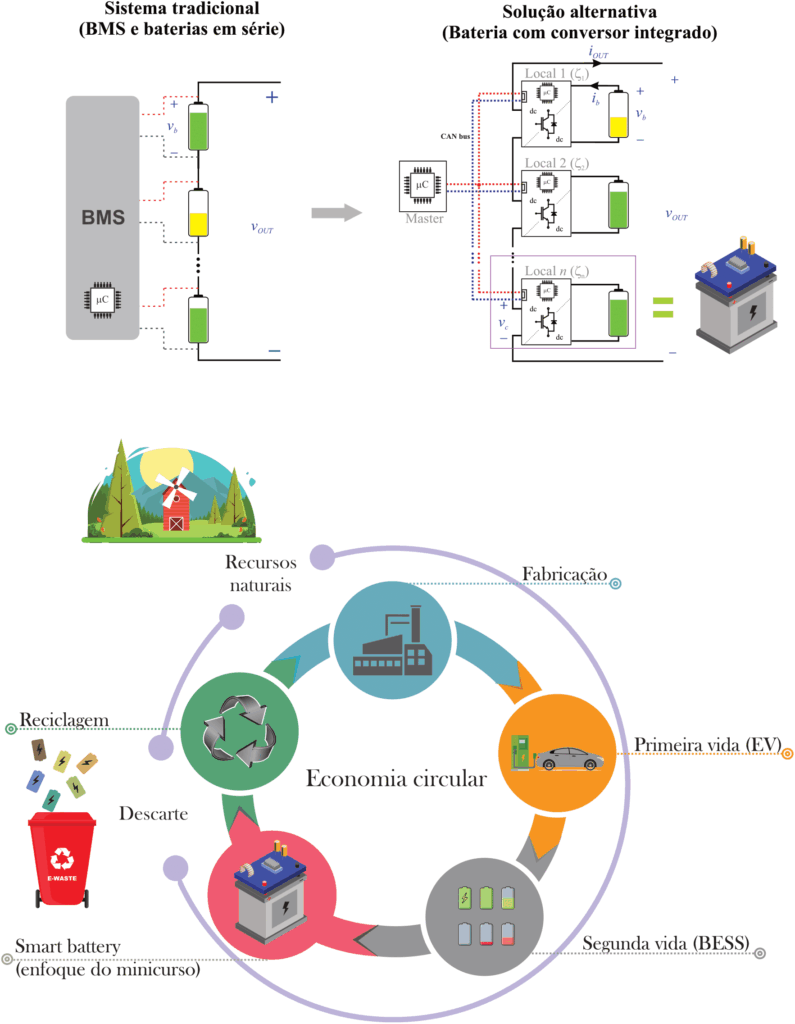
At the same time, the evolution of electric mobility has contributed to the reduction of battery costs, enabling their large-scale application. A particularly relevant aspect is the growing interest in second-life batteries, which come from electric vehicles and are typically discarded when they reach 70% to 80% of their original capacity.
However, the conventional BESS architecture imposes limitations, especially given the heterogeneity in battery degradation levels. This minicourse covers BESS technology from its fundamentals and gives special attention to the concept of Smart Batteries (batteries with integrated converters), which represent an evolution over traditional architectures by offering greater flexibility, reliability, lifespan, and operational safety.
The methodology combines theoretical presentations, comparative analyses, computational simulations, and experimental results obtained from different research groups, including GESEP. The objective is to train participants in this field and to promote the development of innovative solutions for applications in microgrids, electric vehicles, UPS, and autonomous energy systems.
Speakers:

Bruno de Araújo Coutinho – Mestrando no PPGEL/CEFET-MG

Allan Fagner Cupertino – Professor no PPEE-UFJF/ Coordenador do GESEP-UFJF